PHYSICAL PROTECTION SYSTEM DESIGN
SECURITY
BY DESIGN
— ENGINEERED INTEGRATION
— RESILIENT PROTECTION
— LIFECYCLE PERFORMANCE
Effective physical protection begins well before security equipment is selected or installed. Praesidium applies a Security by Design approach that incorporates physical protection requirements into the fundamental configuration of the facility. Security is treated as an engineering consideration that influences site layout, building configuration, access control, equipment location, utilities, and operational interfaces.
The design process begins with a detailed understanding of the facility, its mission, regulatory requirements, and the assets and functions requiring protection. Security measures are then developed as part of an integrated system rather than as individual components. This allows detection, assessment, delay, communications, response, and supporting infrastructure to work together while minimizing unnecessary complexity and avoiding security features that interfere with safe and efficient facility operation.
Praesidium's objective is to develop Physical Protection Systems that are inherently secure, resilient to failure, compatible with facility operations, and capable of demonstrating sustained performance throughout the facility lifecycle.
01
FACILITY
CHARACTERIZATION
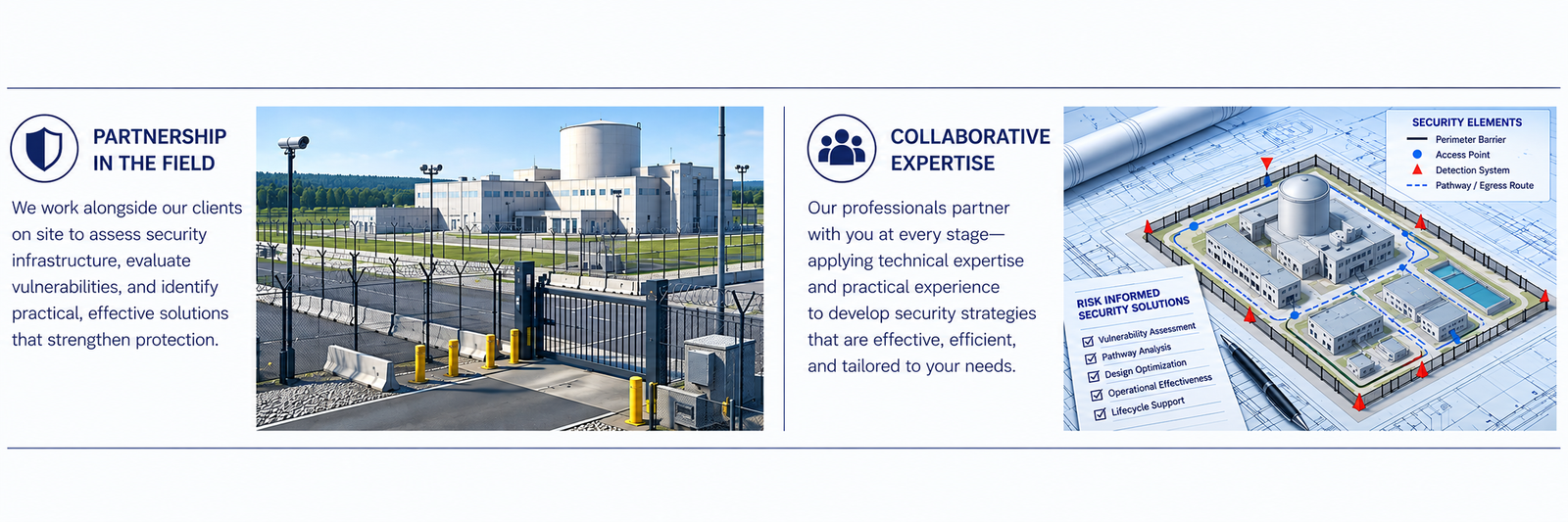
Effective security design begins with understanding the facility itself. Praesidium evaluates site configuration, building arrangements, security boundaries, access points, target locations, personnel and vehicle movement, supporting infrastructure, and operational constraints to establish the physical and functional environment in which the Physical Protection System must operate.
Understanding the facility establishes the foundation for security measures that are appropriate, effective, and site-specific.
02
REDUNDANCY &
RESILIENCE
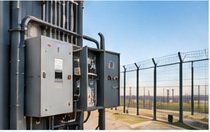
Critical security functions should not depend upon a single component, pathway, utility, or supporting system where failure could compromise protection. Praesidium incorporates redundancy, diversity, separation, backup power, alternate communications, and elimination of critical single points of failure into Physical Protection System design.
Resilient design preserves critical security functions when individual components or supporting systems are challenged.
03
SELF-MONITORING &
SYSTEM AWARENESS
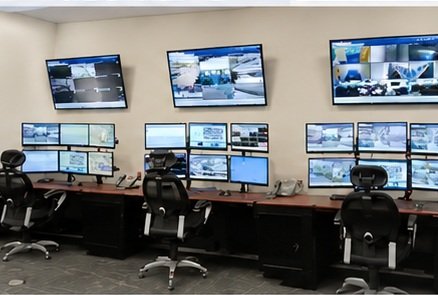
An effective Physical Protection System must identify not only potential adversary activity, but also degradation of its own capabilities. Praesidium incorporates tamper indication, equipment supervision, communication monitoring, power monitoring, fault annunciation, and system-status reporting so degraded or failed security functions can be promptly identified and addressed.
Continuous system awareness provides confidence that protection capabilities remain available when they are needed.
04
SAFETY & SECURITY
INTERFACE
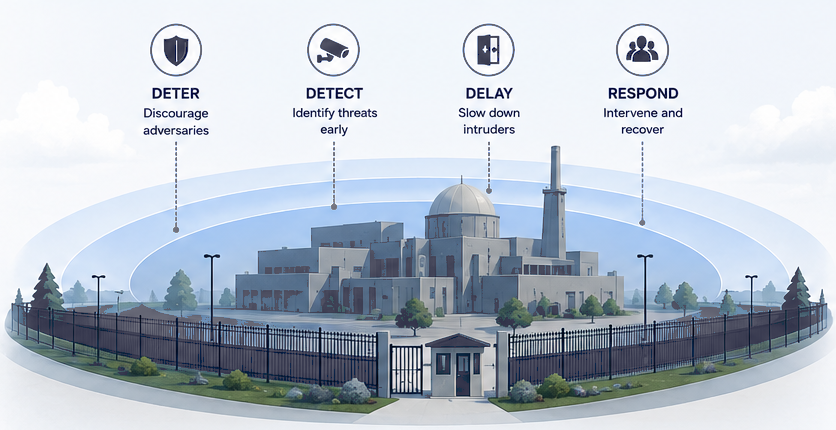
Security measures must protect the facility without adversely affecting the systems, personnel, and activities necessary for safe operation. Praesidium evaluates interfaces between safety and security functions, including access and egress, emergency response, fire protection, equipment access, maintenance activities, power and communications, and interactions between security barriers and safety-related functions.
Integrating safety and security objectives produces a balanced design in which protection measures reinforce—not compromise—overall facility performance.